
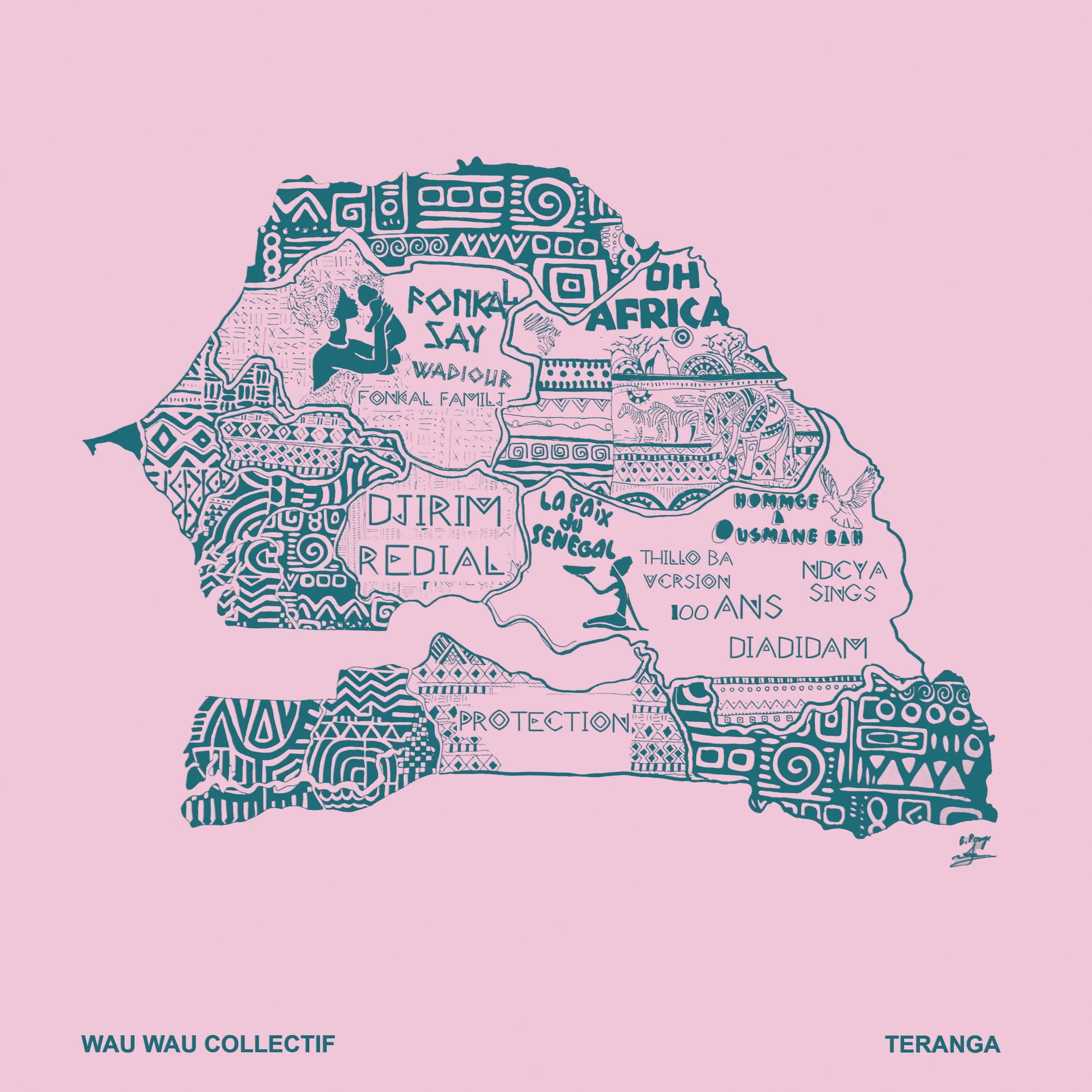
Words by Justin Turford
It was the good old Bandcamp algorithm that led me to Wau Wau Collectif. The Swedish-Senegalese outfit’s first album, ‘Yaral Sa Doom’, was an instant soul connection. A naturally flowing and compelling combination of West African and Northern European folk traditions with a playbox of genre-defying ideas unafraid to dip into the avant-garde yet always brimming with wonderfully accessible melodies and harmonic warmth. So many things that I love in music coalesced in their joyfully unpredictable sound.
The brainchild of Sing a song fighter label boss and musical all-rounder Karl-Jonas Winquist and the Senegalese multi-instrumentalist and studio engineer Arouna Kane, the Collectif began as a slowly evolving project that involved recording local artists drawn to the local cultural hub, the village of Toubab Dialaw, before sending ideas and recordings between Senegal and Sweden via WhatsApp to be completed in Stockholm. Over a few years, 2021’s debut album and the next year’s successor, ‘Mariage’, followed this process with multiple musicians contributing to the recordings. The convoluted production must have been tricky at times yet the final results have a beautiful immediacy, both albums full of great songs with a real sense of communal alchemy despite the geographic and cultural distance between the artists.
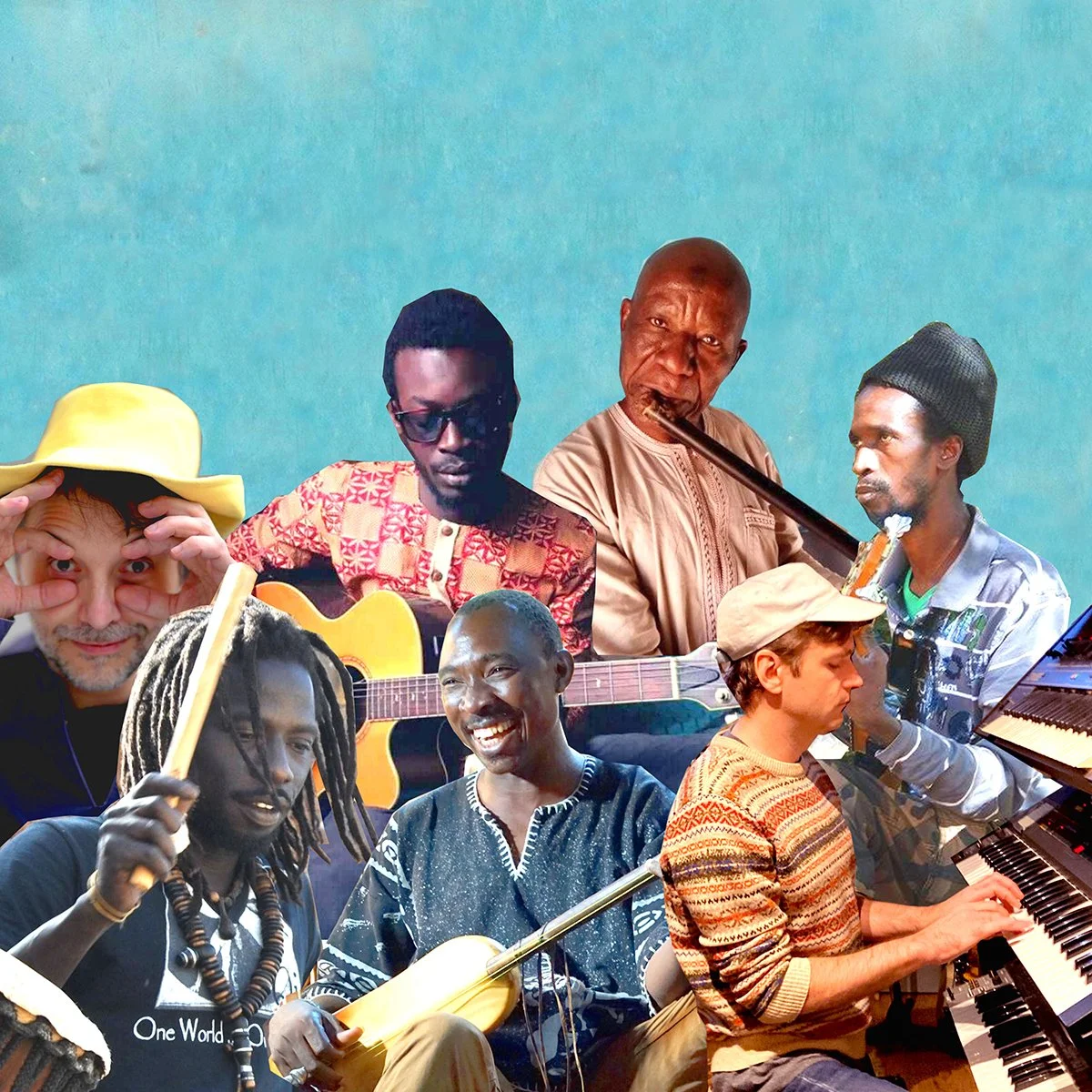
Conceived as the final part in a trilogy of albums, ‘Teranga’, has a similar creation backstory. Made during and after the COVID emergency, twenty six musicians and vocalists contributed to the record and in keeping with the band’s democratic nature, the songwriting credits reveal a widely shared responsibility. Mixed and finished during their first ever tour together - five weeks across Europe with "three Swedes, three Sénégalaise, and a French driver, a lovely mess of languages”, the Collectif have lost none of their charm.
The album welcomes us with Arouna Kane’s lovely acoustic lullaby ‘Redial’. A gently lilting village singalong with loosely strummed guitar, bass, flute and Emma Nordenstam’s cello and softly sung voice joining Arouna around the camp fire. The album’s title ‘Teranga’ is itself a Wolof word used to express hospitality and this sense of sharing is abundantly clear straightaway.
‘100 Ans’ is the first example of the Wau Wau Collectif in its new band incarnation, being recorded in one day in a studio whilst on tour. A call to relax and to just keep going in an ambiguous world, the dual vocals and lyrics of Babacar Diol and Django Diabaté combine beautifully over a deeply funky groove that is as much Mali as it is Senegal. Django also contributes a fabulous ngoni line but the lion’s share of the instrumentation belongs to Lars Fredrik Swahn whose superb guitar, bass and vintage keys work are the backbone of the song. Based on this, the band’s next stage as a studio band promises much.
Babacar takes the lead voice on the psychedelic groover ‘Oh, Africa’ (above), a song that grabs all kinds of cross-cultural inspirations and throws them into the soup. Awash with reverb, Annarella Sörlin’s flute (she also has a fantastic duo project with Django) and waves of trippy synths and things create a heady atmosphere, anchored by Henry Moore Selder’s deadly bass line and paired back percussion. The hooky guitar supplied by Reine Fiske is almost Levantine in its scratchy strangeness.
There has always been positive messaging in the Collectif’s songs since its beginning in Toubab Dialaw and ‘Fonkal Say Wadiour’ is another fine example. Arouna sing-speaks (in Wolof like on most of the album) of respecting and honouring your parents over a slow-burning groove coloured by Karl Jonas’s gleaming omnichord harp sounds and a mini-choir of wordless backing vocals.
Senegalese rising star Thillo Ba delivers a delightful vocal on her ode to her country, ‘La Paix du Senegal’. Calling for peace, dignity and teranga, Thillo’s youthful positivity makes a perfect marriage to Issa Kouyate’s gorgeous kora playing and Ndongo Faye’s strident hand drums.
The album’s exquisite title track is worth the price of admission alone: it literally brings tears to my eyes each time I listen to it. A stellar example of how the band shares creative responsibility, the Swedish-Wolof lyrics to ‘Teranga’ were written by Karl Jonas but co-voiced by Samba Lo (with backing vocals from family members Djibril and Penda who I assume are part of the Lo family who appeared on ‘Mouhamodou Lo and His Children’ from the ‘Yara Sa Doom’ LP). As much a pastoral Scandi-folk song as it is West African, this instant classic is the dreamy centrepiece of the record. A long-time collaborator with Karl Jonas, Emma Nordenstam’s cool Nordic voice joins Samba as joint lead as a swirling flute and Ulrika Gyllenberg’s folky violin pulls stars from the sky over some heartbreaking acoustic guitar and kora interplay.
As its title makes clear, ‘Hommage à Ousmane Bah’ is a tribute to the Senegalese fula-flutist Ousmane Bah who contributed heavily to the ‘Mariage’ album but who sadly passed away after the recordings were finished. Co-credited to Ousmane, it marries his wonderful looping flute riffs with balafon, warm keys, hand drums and layers of voices led by Cecilia Klingspor which are sung with open-hearted abandonment. Ousmane may have transcended but his spirit feels completely alive on this joyous rhapsody to his life and talents.
Pape Saliou is the sole writer on ‘Djirim’ and it is his emotional tenor voice and guitar that carries this Afro-bluesy plea to God to show wisdom and mercy to orphaned children. Sung in both Wolof and French and with a magical flute contribution by Annarella, the song is undoubtedly the most melancholic moment on the record but also undoubtedly stunning.
The scratchy, post-punky ‘Fonkal/Familj’ could easily be an outtake from Talking Heads’ classic ‘Remain In Light’ LP with its tumbling drums and percussion, archaic synthesizers and fuzzed-up guitar energy. Arouna’s baritone voice reveals that it isn’t David Byrne and Co. at the helm but there’s a similar magpie-like attitude in play with tablas and choral passages thrown into the mix. Karl Jonas has cited avant-gardist Barney Wilen's 1972 album ‘Moshi’ as an inspiration, its eccentric mashing up of African field recordings, free jazz sensibility and weirdo funk pre-dating Eno and Byrne’s experiments by several years and one can hear the influence clearly on this track.
As gentle as a placid lake, the lightly swaying ‘Ndeya Sings Diadidam’ contains that melodic, lullaby-esque spirit that the Collectif seem to do so effortlessly. Ibou Calebasse’s calabash and Nyede Wade’s delicate vocals lead on this sweetly delivered composition about remaining positive and fearless during life’s journey.
The only song entirely sung in French, ‘Protection’ is a sprawling Afro-avant-jazz number with heavy saxophone action by the great Lina Langendorf, wild call-and-response between talking drums, balafon, flute and the shared proclamatory voices of Babacar Diol and Mo Gaïndé. It sounds not unlike Brigitte Fontaine’s early 70s experiments with the Art Ensemble of Chicago which is a big plus in my book!
This delicious album comes to a close with ‘Teranga Star’, a more dubbed out but welcome refrain of the title track. Possibly even more intimate than the full version, Samba Lo takes a bow and lets the other singers come to the fore as a slowly ascending melodica and violin add lush harmonic textures.
If the Wolof word ‘teranga’ means to be welcomed then Wau Wau Collectif have delivered the perfect soundtrack to this statement of humanity at its best. Experimental yet completely accessible, this is music that reinforces connection in a time of seemingly abrasive separation. Packed with melody, harmony (in all senses) and a deep collaborative energy, this is a worthy closing chapter to a trilogy of albums that has made fans across the globe. I’m already looking forward to their next incarnation! 10/10.
BUY HERE! https://wauwaucollectif.bandcamp.com/album/teranga