
Words by Justin Turford
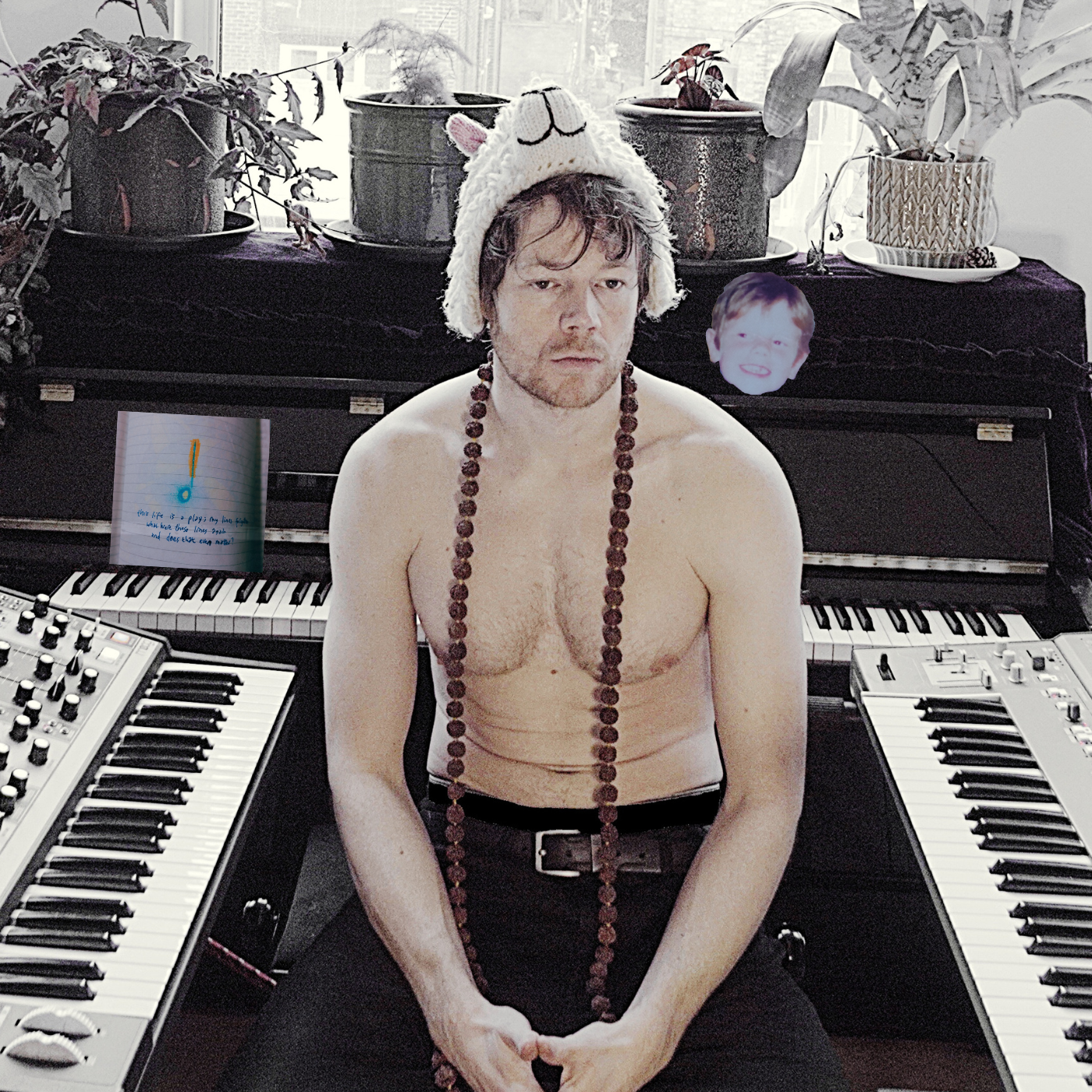
Now this record feels genuinely original. Chaos, harmony, spoken word, beautiful musicianship, wonky, grimey, jukey beats. Not exactly what you’d expect from someone who was the keyboardist for the Cinematic Orchestra for nearly a decade, being neither obviously cinematic nor grandly orchestral. Dominic J Marshall’s new album ‘The White Prince’ is, however, many other surprising things. The multi-instrumentalist has taken a big bite of the brave apple and delivered an uncompromising and voracious stack of tracks (eighteen) that fly across genres and sound periods, stirring and seasoning as he throws in pinches of contemporary L.A. style fusion (think Thundercat etc), UK rap, 80s synth-funk, a twist of D’Angelo, Ryuichi Sakamoto, Satie and the Baroque.
His previous album, ‘Fire-breathing Lion’, was in some ways, the warm up for this one. A cosmic, occasionally jarring combination of jazz, classical and electronica, he was already playing with ‘broken’ rhythms and odd timekeeping alongside treated synths and chamber motifs. Tracks of stark harmonic beauty sit alongside quicksand drum machine grooves that slap backwards in that post-Dilla way that we’ve become accustomed to, sounding like a jazz-trained Plaid, Thundercat or even Aphex Twin at his most sympathetic. ‘The White Prince’ feels darker somehow, aggrieved at this harder present that we are all experiencing.
Recorded, produced, mixed and mastered by Marshall as well as appearing on piano, synths, bass guitar, vocals, drum machine and guitar, there’s a Prince-like commitment to his own vision and sound, and he does it uncommonly well. He’s not entirely alone though. Luke Wynter appears throughout on guitar and a succession of guest musicians have their moments as we shall see. Complex and rhythmically surprising, the drums appear to be a point of difference. The jazz/drum & bass drummer Septabeat (aka Sam Gardner) shares beats duties with the Portuguese hotshot Zoe Pascal, their contributions aligned with Marshall’s own drum machine sequencing to create a powerful rhythmic foundation that adds to the album’s futuristic qualities.
Photo by Sahil Kotwani
The title track opens the album with twinkling childlike keys before toughening up with scattershot Septabeat drums, bulging bass synth and Marshall’s rapped vocals - an opaque trail of personal thoughts and observations, a ‘she’ who appears several times on the record, delivered deadpan as though in contrast to the gorgeous piano and synth harmonies that swirl behind the beat.
‘Antonina’ sounds like Sakamoto’s YMO jamming with Squarepusher and George Clinton in his ‘Atomic Dog’ period, all twisted Eastern melody chimes and unquantised drum machine mayhem. Weirdly satisfying.
The muscular double bass of Edmondo Cicchetti provides the bedrock of the wonky jazz quartet number ‘Late’, Gabriele Pribetti bringing a Middle Eastern vibe on the saxophone while Zoe Pascal’s drums swing from brushes to behind-the-beat hip hop to a wild, abstract jazzy-grimey rhythm as Marshall raps fast with his finger pointing. At whom, we don’t know.
‘Golden Burn’ is a gnarly headnodder with overdriven synths, drum machine and post-funk guitar before dropping into a second half of exhilarating piano and Septabeat chaos.
The ‘she’ mentioned before becomes a ‘you’ on ‘Psalm 15’, a track that is as emotionally confusing as it is melodically memorable. There’s a fabulous hook played by Rowena Marshall (flute) and Poppy Daniels (trumpet) which Marshall sings along with à la Yasiin Bey and the whole song gives off a sunshine vibe except for the lyrics which veer between criticism of ex-girlfriends, braggadocio and a need for love and understanding. Analysing a rapper’s lyrics can mean assuming the direct may be indirect and the opaque may be transparent sometimes but there is a sense throughout of recent pain, even anger in his choice of words.
‘I Will Purify’ returns to the quartet setup (plus flute) , and it swings warmly with a lovely main riff that segues into a whole new second half of outstanding ensemble playing.
He’s definitely got something he wants to say on this album although I’m not entirely sure what it is. Behind the full-bodied jazz-hop groove of ‘Imagination’, Marshall spits learned wisdom, threats and poetic doublets in that bluntly laconic UK rap style, deeply felt emotions delivered dry and sharp.
With tightly sequenced drum machine patterns from Septabeat, ‘Household Regiment’ hits with the same verve as the techno-jazz style hailed by Ian O’Brien and co back in the 90s but with more jazz and less Detroit.
‘Cornel’s Woe’ is a doomy, heavy groove with a distorted two note guitar riff coiling its way inside tough, straight ahead drums, detuned keys and an insistent vocal. Very hip hop but with a rockier live feel. Another rock riff holds the churning groove of ‘Ariana CP’ together. Layers of strange percussive noises, keyboards and pianos build walls of harmonic clashing but never too much. Ace.
He’s probably at his most Thundercat on ‘The Spirits’, deadly funky, weird and ever restless as the song seems to move through a trilogy of separate ideas, regret being the theme of his words in the tightly arranged third chapter.
Luke Wynter takes on both bass and guitar on the sun-blessed ‘Gold Cathedral’, a futuristic jazz-fusion number with excellent drum programming and superb interplay between Marshall’s keys and Stuart Brignel’s saxophone.
A mixture of sung and rapped vocals express his conflicts and anguish over relationships (a pervading theme) on ‘Baptism By Fire’, a lush midtempo number with R&B undertones that wigs out at hyperspeed at the end.
‘Margareta’ is a beautiful chamber piece built out of coloured glass and steel. A nearly overwhelming layering of lush chords, melodies and counter-melodies wash over you as the drum patterns twist and turn in every direction. Stunning in its contradictions - it is somehow lucid yet highly intricate.
‘Underwirld’ (not a typo) sees vocalist Claire Reneé bringing her sublime R&B/jazz chops to another song of pained love hidden within a composition of rich harmonic lushness and versatility. I particularly love the first half’s drum programming as a contrast to the sweetness of the vocals and sax.
The lovely ‘Beautiful’ is part woozy ballad and part stressed self-reflection. Musically responding to each state, the lyrical keys are the colour scheme that pulls them together.
Taking his love for the L.A. scene to its most pronounced, Marshall has invited the great multi-instrumentalist, composer and conductor Miguel Atwood-Ferguson to supply a wonderful strings arrangement for ‘Bosinney’s Cove’, an epic vignette of low slung orchestral jazz-funk with Blue Lab Beats’ David Mrakpor on vibraphone and Abel Addington’s electric bass adding their own superior qualities to the mix.
‘My Throne’ closes this massively ambitious album with an ambiguous lovelorn sung and rapped vocal over Isaac Kizito’s boom bap beats and a waterfall of glittering synths. Linking the two-sided relationship between the Fool and the King, his words end with a kind of self-realisation.
Huge in scale and in intent, ‘The White Prince’ isn’t an easily accessible listen but its richness in independent ideas and virtuosity demand that you give it a go. Impossible to pin down to even a few genres, this does feel brand new. 9/10.
BUY HERE! https://dominicjmarshall.bandcamp.com/album/the-white-prince